AN0184927512;bpu01jun.25;2025May06.06:35;v2.2.500
Exploring Perception Disparities in Agricultural Risk Management Process Training: An Analysis of Skill Transfer Perspectives Between Supervisors and Trainees
This study explores the comprehensive examination of Agricultural Risk Management (ARM) process skill transfer dynamics between supervisors and trainees. The main points encompass understanding the details of the ARM process and identifying perceptual discrepancies in rating the level of transfer between trainees and supervisors. The investigation aims to contribute valuable insights into refining ARM process dissemination strategies for improved agricultural resilience. Employing a cross‐sectional mixed‐method approach, this research utilized independent t‐tests for quantitative data analysis, facilitated by SPSS software. Furthermore, qualitative data underwent meticulous thematic content analysis conducted through Atlas.ti. The participant demographic characteristics, showcasing a balanced gender distribution among trainees and supervisors, highlighted the cohort's diverse educational backgrounds and qualifications. Trainees exhibited varying educational levels, while supervisors mainly possess advanced degrees, signalling their potential sway in mentoring dynamics. The study uncovered notable gaps within the ARM process framework, notably the absence of comprehensive risk assessment, diversified strategies, formal monitoring mechanisms, and the incorporation of behavioural and financial elements. Emphasizing collaboration and proactive approaches toward addressing long‐term risks, particularly climate change adaptation, emerged as pivotal components. Significantly, the study revealed marked differences in perceptions between supervisors and trainees regarding ARM skill transfer, accentuating the necessity for tailor‐made training initiatives. The implications drawn from this study underline the critical necessity for customized training modules that consider the distinct needs and perceptions of supervisors and trainees. Furthermore, fostering enhanced collaboration and advocating for a comprehensive approach to mitigating long‐term agricultural risks, notably the impacts of climate change, emerge as imperative strategies. These implications carry profound significance in refining risk management practices, bolstering agricultural resilience and ensuring sustainable agricultural practices.
Keywords: agricultural risk management; comprehensive risk assessment; perceptual discrepancies; skill transfer dynamics; supervisors; tailor‐made training initiatives; trainees
Introduction
Agricultural risk management (ARM) is a vital component of sustainable agriculture and rural development, particularly in the face of increasing climate variability, market uncertainty, and other shocks and stresses. The effective implementation of the ARM principles and process can help farmers and rural communities mitigate, adapt to and recover from a wide range of risks and uncertainties, thereby enhancing their resilience and livelihoods.
ARM may refer to a set of principles, tools and practices that are used to manage uncertainties in agriculture production, such as price volatility, production risks and weather‐related risks, to name but a few (Mishra et al. [18]). The ARM process involves identifying, assessing and prioritizing potential risks faced by agricultural enterprises and implementing strategies to mitigate or transfer these risks (Skees and Cavanaugh [24]).
Agricultural risk can impact agricultural production and livelihoods and is categorized as production, price, financial and institutional risks. Production risks encompass weather‐related factors, pests, diseases and other influences on crop and livestock production. Price risks involve market price fluctuations affecting farming profitability. Financial risks relate to credit, insurance and other financial services crucial for risk management, while institutional risks involve policy and regulatory issues influencing agricultural production and livelihoods. Farmers and stakeholders always use several strategies and tools to guard against risks and uncertainties, which may include diversification, crop insurance, weather‐indexed insurance, forward contracting and risk‐sharing arrangements. Effective risk management should be tailored to farmers' needs and context‐specific for sustainable agricultural production and rural livelihoods (Shah and Alharthi [23]). It helps farmers maintain income, reduce poverty, enhance food security, access credit and cope with environmental challenges, contributing to resilient farming systems and communities (Finger et al. [9]; Jones and Leibowicz [14]). Adopting sustainable practices ensures long‐term production system sustainability, reducing vulnerability to risks.
It should be noted that the principles and practices of ARM will vary significantly depending on the context and nature of the risk profile of each agricultural enterprise. However, some common principles and practices include risk assessment, which involves identifying and analysing the types of risks that a farming operation may face. Similarly, there is a principle of diversification that is also important; it involves spreading risk across different enterprises, such as crops or markets, to minimize exposure to a single source of risk, by diversification of production and income sources, adoption of insurance and other risk transfer mechanisms (World Bank [25]). Farmers can also embrace new technologies such as irrigation, pest and disease control and precision farming so as to increase their production efficiency and reduce input costs. Implementation of good agricultural practices to reduce environmental and health risks. Collaboration with other stakeholders, such as financial institutions and government agencies, to access resources and expertise (Bergevoet [4]).
Extension workers play a critical role in promoting ARM among farmers. Extension workers are trained professionals who provide technical assistance, training and advice to farmers on a range of agricultural issues, including risk management. They help farmers identify and assess risks, develop risk management plans, and access risk reduction tools and technologies (Mishra et al. [18]). Extension workers also provide training as an extension service to farmers, which is vital in enhancing the adoption of new innovations, technologies and practices. They can also link farmers to other stakeholders, such as financial institutions and insurance providers. To equip farmers with comprehensive methods of ARM, 300 agricultural extension officers nationwide were trained in 2018 by the Ministry of Agriculture, Animal Industry, and Fisheries (MAAIF) in collaboration with Makerere University College of Agriculture and Environmental Sciences in ARM processes and practices to help farmers better manage agricultural‐related risks. Amounts were spent on ARM training for agricultural extension officers, and similar to the well‐known large investments made globally in training, questions have been raised about how much of these expenditures translate into training being applied in the workplace.
Despite their critical role, little is known about how extension workers perceive and navigate the ARM implementation process and the factors that may facilitate or hinder their effectiveness in this role. This study aims to fill this knowledge gap by exploring the ARM implementation process and associated factors among extension workers. Utilizing qualitative data from interviews in a selected region, we analysed their experiences, perceptions and contextual factors shaping their decision‐making. Our findings offer insights into the dynamic nature of ARM implementation, emphasizing the importance of understanding extension workers' perspectives.
Constraining Factors in Implementing ARM
While ARM holds substantial benefits, various constraining factors impede its effective implementation. A primary challenge is the limited access to critical information and resources, such as weather data, market information and financial services, particularly in developing countries where technological and infrastructural access for farmers is constrained. Additionally, the high cost of insurance and other risk transfer mechanisms, coupled with a prevailing lack of trust in financial institutions and insurance providers, poses further obstacles to ARM adoption (World Bank [25]).
The main objective of ARM is to alleviate the adverse effects of production, marketing, and financial risks and uncertainties. However, to achieve this, there are obstacles to encounter as a result of different constraining factors. A significant challenge lies in the insufficient access to relevant and reliable information on risk management strategies, especially for small‐scale farmers lacking the capacity to invest in necessary tools and technologies (Akhtar et al. [1]). The absence of adequate training and technical support for both farmers and extension workers presents another hurdle to the effective implementation of ARM (Gouws et al. [11]). Moreover, the inadequacy of policy and institutional support for ARM, as highlighted by Olayemi et al. ([20]), creates uncertainties due to the lack of clear policies and regulations, discouraging farmers from investing in risk management strategies. ARM interventions can only be meaningful if there are collaborative efforts from different stakeholders, such as farmers, government agencies and the private sector. Without such joint efforts, the farmers will not be excited; hence, the effectiveness of the interventions will be at stake.
Supportive Factors for Implementing ARM
Several enabling factors contribute to the implementation of ARM. These factors include appropriate risk management and uncertainty measures, as well as the utilization of contemporary technologies like weather index‐based insurance and weather forecasting services. Establishing partnerships and linkages among farmers, extension workers, financial institutions and other stakeholders is another key factor in promoting increased access to information and resources while fostering trust and cooperation.
Supportive policy and regulatory frameworks, including subsidies for insurance premiums and the establishment of risk‐sharing funds, also play a pivotal role in promoting ARM practices (World Bank [25]). Financial incentives and support mechanisms for farmers and extension workers, such as subsidized insurance premiums, credit facilities and grants, are critical contributors to successful ARM implementation (Food and Agriculture Organization FAO [10]).
When there is effective collaboration and networking among the different stakeholders, for example, farmers, extension workers, researchers and policymakers in general, it can help facilitate the exchange of knowledge, information and best practices in ARM through formal and informal interactions. This collaborative endeavour nurtures trust and confidence among stakeholders, thereby creating an enabling environment for ARM (Olayemi et al. [20]). According to Akhtar et al. ([1]), when extension workers and farmers are equipped with the necessary skills and knowledge in relation to the ARM process through capacity building and training programmes on new technologies and innovations, this will support the ARM knowledge transfer.
The primary objective of this study is to examine the perceptions and influencing factors associated with the transfer of ARM skills from supervisors to trainees. This investigation particularly focuses on both the ARM process and the disparities in perceptions between supervisors and trainees.
Research Questions
How do extension workers engage in the implementation of agricultural risk management principles and practices, and what is the overarching process involved in their application?
What factors constrain the effective implementation of agricultural risk management among extension workers, and how do these constraints impede the integration of risk management practices?
What supportive factors play a crucial role in facilitating the implementation of agricultural risk management among extension workers, contributing to the successful adoption and application of risk management principles?
What critical components of the agricultural risk management process are perceived as essential for skill transfer by both supervisors and trainees, and what discrepancies exist in their perceptions?
Methodology
To enhance the robustness of our study, we employed a cross‐sectional research design that seamlessly integrated both qualitative and quantitative methodologies. The researcher used a mixed approach to gain a more comprehensive understanding of the depth and insights of the ARM. The qualitative method complemented the quantitative by allowing the researchers to explore the depth of experiences, perceptions and motivations. It also helped to explain 'why' certain ratings existed. It offered insights into the nuances of behaviour and decision‐making.
Our focal point was extension officers nationwide who had undergone comprehensive ARM training at Makerere University, precisely 6 months post‐training. To ensure the reliability of our findings, a meticulous combination of telephone interviews and personal face‐to‐face interactions was employed for data collection, exclusively involving extension workers who had participated in the ARM training. Quantitative data were acquired through a comprehensive trainee survey questionnaire, while qualitative insights were gathered via in‐depth personal interviews and focused group discussions with key groups, including trainees and their supervisors.
The sample size comprised 100 public agricultural extension workers, of whom 50% were trainees trained by Makerere University and 50% were their supervisors, selected randomly from training lists using a probability‐based approach. A list of potential key informants was obtained, after which we narrowed it down to only 26 key informants who were purposively selected based on their first‐hand knowledge of trainees' performance and issues related to ARM who were basically supervisors such as district production officers, senior agricultural officers and district veterinary officers.
With different perspectives for an in‐depth understanding of the study. The respective dates and places of meeting for each participant were agreed upon and fixed with the participants. On the agreed dates, each participant travelled to the place of meeting, which was considered central and convenient for the majority. An interview guide was designed for the key informants selected; the interview lasted between 30 and 60 min as we collect specific information from each key informant. Face‐to‐face interviews were used because they allowed for more complex questions and more detailed responses. A tape recording was used in KI interviews with prior permission from the informant to ensure that all information is captured. In case the respondent declined to be tape‐recorded, the interviewer made a deliberate effort to write notes as the interview proceeds. Phone calls were used for follow‐up interviews where clarity was needed and to the six respondents who we not physically accessible. The qualitative data collection process took 9 days.
Instrumentation
The researcher developed and used both quantitative and qualitative questionnaires. The quantitative questionnaire had six constructs measured at a five‐point Likert scale, ranging from 1 = strongly disagree to 5 = strongly agree. It also collects demographic information such as gender, education level, professional discipline, age and years of experience from both trainees and supervisors. For qualitative, key informant guidelines were used.
To ensure data quality, a pre‐test involving 15 extension workers of diverse genders was conducted to determine the reliability estimate. Cronbach's alpha and composite reliability cut‐off values of 0.7 were recommended by Hair et al. ([13]) for both observed and unobserved variables, signifying the internal consistency of the instrument.
To ensure the content validity of the research instrument, the researcher used the formula for the content validity index (Amin [2]). The findings were used to calculate the content validity index (CVI) using the formula: CVI=K/N, where K is the total number of items in the questionnaire declared valid and N is the total number of items in the questionnaire.
The computed CVI of the instrument was 0.9. This was considered valid because the minimum CVI recommended in the survey studies is 0.7 (Amin [2]). Construct validity was further assured through giving the tool to the supervisors and fellow graduate students to assess sentence construction in terms of length, language, clarity and comprehensiveness of the questionnaire in line with the set objectives.
Data Analysis Techniques
Independent t‐tests were carried out to investigate potential distinctions in the mean rating score between supervisors and trainees of the ARM. The mean rating score was obtained from the average mean score of the items from each construct. Each construct was scored on five‐point Likert‐type scales with responses ranging from 1 = strongly disagree to 5 = strongly agree. The average score for each construct was obtained and its standard deviation. The 95% confidence interval in which the true mean lie was assessed. The assumption of homogeneity of variance was tested and satisfied via levene's F test. The effect size was assessed using Glass's delta (Becker [3]).
Thematic analysis was used to identify patterns within the data that explain how and why there has been continued use (transfer maintenance or failing to continue). Data were transcribed from the recordings, and transcripts were obtained. The transcripts were read and reread to get a clear understanding of the flow of the data. Using colour coding, categories and themes were grouped to develop a code sheet. The coded data were then exported to Atlas TI software for analysis, after which a report was generated. The whole process of analysis took three (3) weeks. The actual findings were discussed in line with existing literature.
Ethical Considerations
Participants were given written information about the study's aims and procedures and about their right to withdraw at any time. Participants were also assured that their names would not be used and that confidentiality would be maintained by the researchers. Before data collection, informed consent from respondents was obtained from each participant. Participation remained voluntary throughout the research process.
Results
In this section, both results from quantitative and qualitative data are presented; quantitative is presented in the form of graphs, while qualitative is presented in the form of tables with themes and dimensions as well as paragraphs. The qualitative data complements the quantitative data. The information from the qualitative data was used for triangulation of information from the quantitative data source to improve on the reliability and richness of the information gathered and produce much more convincing and accurate findings. Therefore, data collected through the KIIs and quantitative were linked together to arrive at concrete conclusions.
Comparison of Demographic Characteristics
The analysis of demographic characteristics reveals several key findings for both trainees and supervisors. They both displayed a relatively uniform distribution in terms of gender. The males were above 50% for both the trainees and supervisors, as shown in Table 1. Regarding education, trainees exhibit a diverse educational background, encompassing diplomas, BSc/BA, postgraduate diplomas, masters and even one PhD holder. In contrast, supervisors predominantly hold Masters (91%) and PhD (9%) degrees. In the professional areas, most of the trainees (40%) were agriculturalists, while the supervisors were from different disciplines; for example, 57% were entomologists and 33% were fisheries officers. The age distribution varies, with trainees skewed towards a younger demographic, notably with 33% falling in the 24–29 age group, whereas supervisors show a more even age distribution. Lastly, experience levels differ substantially, with trainees displaying diverse experience, primarily with 1–4 years (24%), and supervisors tending to be more experienced, with a significant proportion having 20–25 years (21%) and 1–4 years (48%).
1 Table Demographic characteristics of supervisors and trainees (n = 50 trainees, n = 50 supervisors).
| Variable categories | Trainees (%) | Supervisors (%) |
|---|---|---|
| Sex of the respondent | ||
| Female | 41.0 | 39 |
| Male | 59.0 | 61 |
| Education of the respondent | ||
| Diploma | 8.0 | — |
| BSc/BA | 34.0 | — |
| Post graduate diploma | 28.0 | — |
| Masters | 29.0 | 91.0 |
| PhD | 1.0 | 9.0 |
| Discipline of the respondent | ||
| Others | 1.0 | |
| Veterinary officer | 7.0 | 1.0 |
| Social economist | 13.0 | 7.0 |
| Fisheries officer | 15.0 | 33.0 |
| Entomologist | 24.0 | 57.0 |
| Agriculturist | 40.0 | 2 |
| Age of the respondent | ||
| 50 and above | 9.0 | 8.0 |
| 45–49 | 7.0 | 23.0 |
| 40–44 | 27.0 | 2.0 |
| 35–39 | 10.0 | 5.0 |
| 30–34 | 14.0 | 34.0 |
| 24–29 | 33.0 | 28.0 |
| Experience of the respondent (years) | ||
| Above 25 | 4.0 | — |
| 20–25 | 21.0 | 6.0 |
| 15–19 | 15.0 | 7.0 |
| 10–14 | 17.0 | 14.0 |
| 5–9 | 19.0 | 25.0 |
| 1–4 | 24.0 | 48.0 |
2 Table Major themes and subthemes in the agricultural risk management process.
| Theme | Subtheme |
|---|---|
| Risk Identification and Assessment | Types of risks faced by farmers. |
| Community involvement in identification of risks. | |
| Implementation of Risk Management Strategies | Adoption of new practices by farmers. |
| The use of financial services, such as insurance policies to protect farmers' investments. | |
| Assess risks and develop a risk management plan | It is important to assess the potential impact and likelihood of each risk occurring. |
| Implement the risk management plan. | Risk management plan into action by implementing new farming practices, purchasing insurance. |
| Monitor and evaluate | Regular monitoring and evaluation of the effectiveness of the risk management strategy is key. |
3 Table Supporting and constraining factors in agricultural risk management.
| Themes | Subthemes |
|---|---|
| Supporting factors | Adequate infrastructure, such as roads and storage facilities. |
| Training and awareness programmes that educate farmers about risk management strategies. | |
| Community engagement to Involve farmers in discussions about risks they face. | |
| Access to financial support. | |
| Constraining factors | Inadequate infrastructure: poor infrastructure, such as a lack of roads and storage facilities. |
| Limited capital to diversify their enterprises. | |
| The inability to market agricultural insurance effectively. | |
| Poor perception about risk management. |
Quantitative Results Rankings of ARM Skillsets Trained and Implemented By Trainees
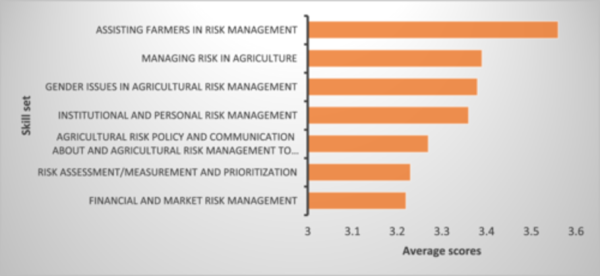
Figure 1 shows the significance of various skill sets in the domain of ARM based on average scores assigned by respondents based on a Likert scale of 1–5, with 1 indicating the lowest and 5 the highest. 'Assisting farmers in risk management' was rated the highest at 3.56, emphasizing the importance of supporting farmers in effective risk mitigation. Close behind, 'Managing risk in agriculture' at 3.39 signifies the recognition of the need for adept risk management in agricultural practices. 'Gender Issues in Agricultural Risk Management' and 'Institutional and Personal Risk Management' received scores of 3.38 and 3.36, underscoring the importance of addressing gender‐specific concerns and personal/institutional risk management. 'Financial and market risk management' and 'risk assessment/measurement and prioritization' received slightly lower scores, indicating room for improvement. Lastly, 'Agricultural Risk Policy and Communication about Agricultural Risk Management to Policymakers' at 3.27 highlights the significance of effective policy development and communication with policymakers. These findings guide the development of training and policies to enhance ARM practices.
Qualitative Results
ARM Process
ARM is the process of identifying, assessing and mitigating risks that can affect agricultural production. The above‐mentioned risk can arise due to various factors, encompassing natural calamities such as droughts, floods and pests, along with fluctuations in prices, alterations in governmental policies, and other economic and social determinants. The following sub‐themes were identified as steps in the process of ARM (Table 2).
Risk Identification
It is important for farmers to regularly review and assess the risks that their operations face, as these risks can change over time due to changes in the environment, markets and other factors. When farmers are able to identify and assess their agricultural‐based risks, they can easily understand the potential impact that may result and the likelihood of these risks occurring; hence, they will be able to develop more effective risk management strategies. Participants worked with a community to identify the risks they faced. Drought was identified as the most significant risk. Some farmers expressed a desire to diversify their enterprises, including potentially adding a coffee enterprise, but did not have sufficient capital to do so. During the process, they guided the community by reminding them of various risks and asking questions to probe further.
Some farmers revealed that drought is the most affecting factor, and some were willing to diversify their enterprises because they have limited capital to engage in other enterprises. For example, one would wish that, in addition to coffee, he could also do livestock enterprises. We observed that with farmers, once they have identified a risk that they consider big, it's what they want you to take up.
(P1: Butambala)
Assess Risks and Develop a Risk Management Plan
Participants revealed that once the risks have been identified, it is important to assess the potential impact and likelihood of each risk occurring. This can help farmers prioritize their risk management efforts and allocate resources appropriately. This means farmers are able to develop their risk management plan, outlining the strategies and action points that will be taken to mitigate the identified risks. This may include diversifying crops or enterprises, implementing proper farming practices, purchasing insurance, or using financial tools such as futures contracts and options.
So, farmers revealed drought is the most significant risk affecting farmers; however, some are willing to diversify the enterprise because they have limited capital to engage in other enterprises.
(P1: Butambala).
Implement the Risk Management Plan
The participants said that farmers had to put the risk management plan into action. This may involve implementing new farming practices, purchasing insurance or using financial tools to hedge against market risks.
Even with issues of insurance, we advised them to consider it as an alternative to buying a policy. For example, we tell them they have invested a lot of money in particular enterprises now instead of losing all the money at once in case of a risk. But we also see that our farmers look at it as something unbelievable.
We have encouraged the use of water harvesting, sustainable land management practices, trenches, agroforestry, mulching, and mixed farming.
(P2: Sembabule)
Monitor and Evaluate
It is important to regularly monitor and evaluate the effectiveness of the risk management strategies being used. This can help farmers identify any areas where the risk management plan may need to be adjusted or improved.
There is need to prioritize skills in ARM for implementation by trainees (Table 3).
Supportive Factors in Implementing ARM
Two main factors helped extension agents successfully apply their prioritized ARM abilities. First, it became clear that 'access to information' was crucial. This includes making fast and reliable data on weather patterns, market swings and relevant factors available so that farmers may make well‐informed decisions about risk mitigation. As part of our methodology, we encouraged members of the team to identify flexible concepts, incorporate these into their work plans and apply them in field operations. Our group's choice highlighted how crucial it is to share this information with certain farmers to have a cascade effect.
Second,
'Financial resources' were very important. Farmers who have access to financial resources, such as credit lines or insurance, can invest in risk‐reduction plans or secure 'After we had training on agricultural insurance, since we were encouraged to market insurance to the farming community but insurance was not marketable, we fronted it as one of the options. Our farmers look at it as something that is farfetched and that they do not think about in their farming activities. But we tried to train them that there are policies that can be used to guard against risks.'
(P4, Masaka)
Infrastructure and improved technology: Adequate infrastructure, such as roads, storage facilities and transportation, can help farmers get their products to market and reduce the risk of losses due to spoilage or other factors.
When agriculturists employ novel methodologies and advancements, such as environmentally conscious technologies and meticulous farming, these approaches can enable them to maximize their yields while concurrently mitigating potential hazards linked to elements such as pests, diseases and climatic conditions.
Butambala is being piloted on the irrigation scheme, and we promised that the agriculture engineer will come on the ground and enroll those who claim that it is the drought that is mainly affecting them on the irrigation scheme.
(P1, Butambala)
Some farmers were identified, especially those who grow high‐value crops like tomatoes and cabbages. We bought potable irrigation equipment: a water pump, horse pipe, and nozzles, and allocated them to the different groups to use it communally.
(P3, Bukomansimbi)
Good government policies that promote agricultural production efficiency by guarding against farmer risks can play a role in enabling ARM by providing support and resources to farmers, such as through agricultural insurance programs, research and development initiatives and the provision of subsidies.
Butambala is one of the piloting districts for the UGIFUT irrigation scheme for farmers. The arrangement is cost shared through UGIFUT; the government contributes 75% and the farmer 25%.
(P1, Butambala)
Multistakeholder platforms are very helpful in helping farmers guard against risks. This can be achieved through effective collaboration and networking, which Building networks and collaborating with fellow farmers, agribusinesses and other stakeholders helps farmers access information, resources and support to manage risks.
Because of the drought, the local government promised irrigation schemes to support farmers, especially those in enterprises that are drought‐prone. After training them on irrigation as a way of guarding against drought, they liked the mitigation strategies, and they started asking how to access the equipment that can help them out as a team.
(P2: Sembabule).
Disenabling/Challenges Factors of ARM
Lack of Information
Without access to accurate and timely information about potential risks, it can be difficult for farmers to make informed decisions about how to mitigate those risks.
Other extension workers were not trained since only two went for the training, so they lack knowledge.
(P2 Sembabule)
Limited access to financial resources was another constraint I defied for many farmers who did not have access to the financial resources needed to invest in risk management strategies such as insurance or diversification.
Some farmers are willing to diversify the enterprise, but because they have limited capital to engage in other enterprises, they were unable to take up the solution.
The issue that has been around and is still existing is that of the matching grant. When you compare the 25% that the farmer is supposed to pay, if you compute it, it goes to 2,500,000/=, or 3 million shillings, which is still expensive for the farmer. We have been linking them to banks like Centenary, DFCU, and Stanbic. So that the items that are given to them as worthy of 75% work as collateral.
Inadequate Infrastructure
Poor infrastructure, such as a lack of roads or storage facilities, can make it difficult for farmers to transport their crops to market or store them safely, increasing the risk of loss.
The phenomenon of climate change has been widely acknowledged as a driving force behind the heightened occurrence and intensity of natural calamities and unprecedented meteorological phenomena. This has resulted in a substantial impact on the agricultural sector by necessitating the implementation of risk mitigation measures by farmers.
We do not do risk assessment, prioritizing, or evaluation. For sure, Lugusulu and Lwemiyaga, we receive hailstones every season; other risks include prolonged.
(P2 Sembabule)
To assess whether the extent of rating between supervisors and trainees on their perceptions of trainees' ability to transfer trained skills in ARM differed significantly, independent t‐tests were conducted for all skill set areas of the process of ARM. The objective was to determine if there were discrepancies in the rating scores between supervisors and trainees who participated in the rating. Table 4 presents the findings, which indicate that trainees achieved a significantly higher mean rating score in five out of the seven skill sets related to the ARM process. Notably, these differences were observed in the following topics or skill sets:
4 Table Perceived level of transfer rates of agricultural risk management training between supervisors and trainees.
| Supervisors (n = 50) | Trainee (n = 50) | ||||||
|---|---|---|---|---|---|---|---|
| Variable | t‐test | p | Glass's delta | Mean | SD | Mean | SD |
| I identified at least 3 types of risk affecting farmers | 3.503 | 0.001 | 0.481 | 2.52 | 1.251 | 3.16 | 1.331 |
| we assessed and identified at least 3 risk management strategies | 2.485 | 0.014 | 0.339 | 2.68 | 1.205 | 3.12 | 1.297 |
| Carried out training on prioritization of risks | 2.626 | 0.009 | 0.3571 | 2.67 | 1.240 | 3.15 | 1.344 |
| used a participatory approach with agender lenses to come up with solutions | 3.397 | 0.001 | 0.448 | 2.37 | 1.169 | 2.98 | 1.363 |
| implement at least one ARM option. | 3.315 | 0.001 | 0.452 | 2.34 | 1.249 | 2.95 | 1.351 |
| Offered positive feedback to the farmers | 1.816 | 0.071 | 0.237 | 2.58 | 1.130 | 2.90 | 1.352 |
| Evaluate the training on ARM I conducted with the farmers. | 1.008 | 0.315 | 0.132 | 2.52 | 1.159 | 2.70 | 1.360 |
Identify at least three types of risks affecting farmers. The t‐test revealed a meaningful distinction (t = 3.503, p = 0.001) between supervisors and trainees in their evaluations of trainees' capacity to identify various forms of risk. The effect size (lass's delta = 0.481) suggests a moderate difference.
Identify at least three risk management strategies. Again, a significant difference (t = 2.485, p = 0.014) was observed in the perceptions of supervisors and trainees regarding the trainees' ability to identify risk management strategies. The effect size indicated a moderate difference (Glass's delta = 0.339).
Regarding the carrying out of training on prioritization of risk, the t‐test revealed that a significant difference existed (t = 2.626, p = 0.009) in how supervisors and trainees view trainees' performance in conducting training on prioritization of risks in agriculture. The effect size was moderate (Glass's delta = 0.3571).
Regarding whether the trainee used a participatory approach with a gender lens, once more, a significant difference (t = 3.397, p = 0.001) was found between the two groups in their perceptions of trainees' using a participatory approach with a gender lens. The effect size indicates a moderate difference (Glass's delta = 0.448).
Implement at least one ARM option: There is a significant difference (t = 3.315, p = 0.001) between supervisors and trainees in their views on trainees' ability to implement ARM options, with a moderate effect size (Glass's delta = 0.452). However, two of the five skill sets were not statistically significant in the ratings of supervisors and trainees themselves.
Offered positive feedback to the farmers: While the p value (t = 1.816, p = 0.071) is slightly above the typical significance level of 0.05, there is still a noticeable difference in perceptions between supervisors and trainees regarding offering positive feedback. The effect size is small (Glass's delta = 0.237).
Evaluate the training on ARM conducted with the farmers. The t‐test does not show a significant difference (t = 1.008, p = 0.315) between supervisors and trainees in their evaluations of the ARM training. The effect size is also small (Glass's delta = 0.132).
Discussion
The analysis of demographic characteristics in the context of ARM reveals a balanced gender distribution among both trainees and supervisors. While trainees possess a diverse educational background, including diplomas, BSc/BA, postgraduate diplomas, master's and a Ph.D. holder, supervisors are predominantly equipped with Masters and PhD degrees, indicative of their higher academic qualifications and potential influence on mentorship. Additionally, trainees primarily identify as agriculturists, whereas supervisors hail from various fields such as entomology and fisheries, contributing to a diverse and well‐rounded approach to training. Age distribution portrays trainees as skewed toward a younger demographic, possibly influencing the dynamics of mentorship within the context. Experience levels differ significantly, with trainees showcasing varied experience and supervisors tending to be more experienced. This divergence in experience levels may necessitate adaptive teaching methods to cater to trainees at different stages of their careers. These disparities underscore the need for tailored training programmes that accommodate these variations, ultimately enhancing the effectiveness of ARM education and mentorship.
ARM Process
The process of ARM encompasses several key steps aimed at identifying, assessing and mitigating risks that can impact agricultural production. These risks arise from a multitude of factors, which come from several natural occurrences such as droughts, floods, landslides, changes in market demand and price fluctuations, as well as unfriendly government policies and socioeconomic factors.
Risk Identification
The initial step in ARM involves the continuous scrutiny and assessment of the risks confronting agricultural operations. Risks evolve over time due to changing environmental conditions and market fluctuations. By identifying these risks, farmers can gain a more comprehensive understanding of their potential impact and likelihood of occurrence. In one instance, a community collaborated to identify predominant risks, with drought emerging as a significant concern. Farmers expressed their interest in diversifying their agricultural enterprises, but they indicated that resource constraints were the limiting factor for them to do so. Through guided discussions and questioning, the community sought to pinpoint and comprehend these risks in greater detail.
Assess Risks and Develop a Risk Management Plan
Following risk identification, the next crucial step is the evaluation of potential risks. Farmers assess the likely impact and occurrence probability of each risk, aiding them in prioritizing risk management endeavours and resource allocation. Based on these risk assessments, a comprehensive risk management plan is formulated. This plan outlines strategies and actions to mitigate the identified risks. Actions may include diversification of crops or enterprises, adoption of best farming practices, acquiring insurance or employing financial tools such as futures contracts and options. A notable example is farmers recognizing drought as a significant risk and considering diversification, albeit constrained by limited capital resources.
Implement the Risk Management Plan
Subsequently, the risk management plan is set into motion. This entails implementing new farming practices, procuring insurance coverage or utilizing financial instruments to hedge against market volatility. For instance, farmers were encouraged to explore insurance as a protective alternative, enabling them to safeguard their investments against potential risks. Furthermore, counsel was given pertaining to the adoption of sustainable land management methods, such as the implementation of water collection techniques, excavation of trenches, the practice of agroforestry and the utilization of mulching.
Monitor and Evaluate
The final step underscores the importance of ongoing monitoring and evaluation. Regularly assessing the effectiveness of risk management strategies helps farmers identify areas where the plan may require adjustment or improvement. This continuous assessment enables adaptability and refinement in response to changing circumstances, ultimately enhancing the resilience of agricultural operations.
The outlined ARM process provides a structured framework for addressing the multifaceted risks that farmers encounter. However, several potential improvements and gaps should be considered based on insights from risk management experts. While the process begins with risk identification, it lacks a comprehensive risk assessment phase. Incorporating quantitative risk assessment methods, such as probability‐impact matrices or risk heat maps, is vital for better decision‐making. Furthermore, the process should provide more detailed guidance on diversification, encompassing principles like crop rotation and livestock integration. Establishing a formal system for ongoing risk monitoring, employing modern technologies and data analytics, is essential. Behavioural and financial aspects should receive more attention, including financial risk management training and behavioural incentives for risk‐conscious decision‐making. Strengthening collaboration and knowledge sharing among farmers through groups or cooperatives can enhance risk awareness. Finally, the process should address long‐term risks like climate change adaptation and sustainable land management practices, in addition to its emphasis on short‐term risk management.
Supportive Factors for the Successful Implementation Prioritized ARM
The findings presented here highlight several key factors that enable extension agents to successfully implement prioritized ARM skills. Accessing information is an indispensable element, as it bestows farmers with the ability to make well‐informed choices pertaining to the management of risks. Extensive research underscores the significance of access to accurate and timely information for improving agricultural practices. The proactive approach of encouraging staff to integrate new concepts into their work plans and disseminate this information to farmers aligns with best practices in knowledge transfer within the agricultural sector.
Access to credit and insurance, particularly financial resources, is recognized as a crucial determinant in the realm of risk mitigation. The testimony from an extension agent underscores the challenge of marketing agricultural insurance to farmers, which resonates with literature emphasizing the necessity of promoting financial risk management instruments to agricultural stakeholders (World Bank [25]).
Infrastructure and technology play an integral role in reducing agricultural risks. Adequate infrastructure, including roads and storage facilities, is known to enhance market access and reduce postharvest losses. Modern technologies, such as irrigation, align with contemporary agricultural practices, reducing risks associated with various environmental factors (Griffin et al. [12]).
Government policies are recognized as a supportive factor in ARM, with financial contributions and cost‐sharing arrangements playing a crucial role. The participation of the government in endeavours such as irrigation schemes has garnered attention in scholarly investigations and is regarded as a mechanism for augmenting agricultural productivity and fortifying resilience against risks.
Collaboration and networking are underscored as pivotal factors for the exchange of knowledge and resources among farmers and stakeholders, especially within the realm of drought alleviation. Collaboration and knowledge‐sharing networks are recognized for their potential to disseminate information and build collective resilience against agricultural risks (Prokopy et al. [21]).
Constraining Factors of ARM
The identified disenabling or challenging factors of ARM shed light on significant obstacles that farmers face in effectively mitigating risks in their agricultural endeavours.
Lack of information is a fundamental challenge, and the testimony of extension workers underscores that this issue can stem from insufficient training and knowledge transfer. This aligns with existing literature emphasizing the critical role of knowledge and information in risk management (Deressa et al. [6]).
Limited access to financial resources is another prominent challenge. Farmers' inability to diversify their enterprises due to capital constraints is a widespread issue in the agricultural sector, and efforts to provide financial solutions, such as grants and links to banks, align with recommendations to improve access to financial risk management instruments (Mendola and Bucchignani [17]).
Inadequate infrastructure, including a lack of essential facilities like roads and storage, significantly hampers risk management. This is consistent with research showing that inadequate infrastructure can increase postharvest losses and hinder market access (Kaplinsky and Sadoulet [15]).
The issue of climate change presents a multifaceted and ever‐changing dilemma for the management of agricultural risks, especially in light of the growing occurrence and intensity of natural calamities. The testimonial highlights the inadequacy of risk assessment and prioritization, which is a critical component in managing climate‐related risks (Lobell et al. [16]).
How Trainees and Their Supervisors View the Transfer of ARM Abilities
In the realm of ARM, the ability of trainees to effectively transfer trained skills is pivotal. The data illuminate significant disparities in perceptions between supervisors and trainees regarding the trainees' aptitude in several crucial ARM skill areas. These differences are of moderate effect size, indicating meaningful distinctions in how the two groups perceive trainee performance in these domains. While these disparities exist, it is worth noting that for two of the variables, 'Offered positive feedback to the farmers' and 'Evaluate the training on ARM', the differences are either marginally significant or nonsignificant. This implies that supervisors and trainees may share relatively similar perceptions regarding these specific aspects of the ARM process.
Accurately identifying various types of risks is a foundational skill in ARM. The data bring to light a significant difference in perceptions between supervisors and trainees on this front. This discrepancy emphasizes the importance of achieving alignment in understanding the diverse landscape of risks farmers face. Precise risk identification serves as the bedrock for effective risk management. Harmonizing the perspectives of trainees and supervisors in this domain is essential for robust risk mitigation.
Identifying risk management strategies is another critical facet of ARM. Here, a significant difference is discernible in the way supervisors and trainees perceive this skill. Recognizing effective strategies for mitigating an array of risks is paramount for successful risk management in agriculture (Musshoff and Hirschauer [19]). Bridging the gap in how trainees and supervisors perceive these strategies is instrumental for the optimal application of risk management methodologies.
Prioritizing Risks Through Training
Effective training on risk prioritization is a fundamental skill that trainees must acquire. The findings underline a significant difference in perceptions between supervisors and trainees concerning trainees' performance in this aspect. This highlights the necessity for enhanced alignment in the understanding of risk prioritization skills (Sawicka and Weglarz [22]). Augmenting training and supervision in this skill area can lead to more effective ARM practices.
In line with incorporating a participatory approach with a gender lens, in the context of ARM, adopting a participatory approach with a gender lens is of paramount importance. A significant difference in perceptions is evident between supervisors and trainees regarding how they evaluate trainees' performance in employing this approach. This underscores the significance of incorporating gender‐sensitive and participatory approaches in ARM (Doss and Morris [7]). Ensuring that both trainers and trainees appreciate the value of these approaches is essential for cultivating more inclusive and effective ARM practices.
Implementing ARM Options
The ability of trainees to implement ARM options also exhibits a significant difference in the way supervisors and trainees perceive this skill. Effective implementation of risk management strategies is indispensable for safeguarding agricultural livelihoods (Facchini [8]). This underscores the need for further training and supervision in this realm to ensure the proficient execution of ARM options.
Areas Requiring Ongoing Assessment
Despite not reaching statistical significance, the two skill sets offering positive feedback to farmers and evaluating the training on ARM retain their importance in the context of effective ARM training (Brink [5]). Ongoing assessment and improvement remain necessary to enhance these skill areas and ensure a comprehensive ARM training programme.
ARM Process
The ARM process outlined is a valuable framework for addressing risks in agricultural production. The above process encompasses several critical stages, which include the identification and evaluation of risks, the formulation of a plan for managing risks, the execution of the plan, and the continuous monitoring and assessment of risks. Nevertheless, there exist multiple domains that necessitate enhancement. These include a need for a more comprehensive risk assessment phase, a greater focus on risk diversification, the establishment of formal risk monitoring mechanisms, a requirement for behavioural and financial training and more emphasis on addressing long‐term risks. Improving these areas would make the ARM process more robust and effective in managing agricultural risks.
Differences in Perceptions Between Supervisors and Trainees Regarding Trainees' Ability to Tr...
The data highlight significant disparities in perceptions between supervisors and trainees in various aspects of ARM skill transfer. While there are differences in how they perceive trainee performance in crucial areas like risk identification and prioritization, it is encouraging to see some alignment in perceptions in specific skill areas like offering positive feedback to farmers and evaluating the training. These disparities indicate a need for targeted training and supervision to bridge these gaps, ensuring that both trainers and trainees have a more consistent understanding of ARM principles and methodologies.
Factors That Enable Extension Agents to Successfully Implement Prioritized ARM
Several key factors enable extension agents to effectively implement prioritized ARM. These include access to information, financial resources, infrastructure and technology, government policies, and collaboration. These factors empower extension agents to provide valuable support to farmers in managing risks effectively. Nevertheless, they are confronted with obstacles, including the insufficiency of data, restricted entry to monetary capital, insufficient infrastructure and the intricate matter of climate alteration. Addressing these challenges is essential for extension agents to continue improving risk management within the agricultural sector.
Disabling Factors in ARM
The disenabling factors of ARM reflect significant obstacles that farmers face when mitigating risks. The obstacles that are listed include a lack of information, limited financial resources, inadequate infrastructure and the complex issue of climate change. It is crucial to address these issues if agricultural operations are to remain resilient and sustainable. Efforts to provide more comprehensive training, increase access to financial resources, improve infrastructure and develop climate‐resilient practices are essential to overcome these disenabling factors and enhance ARM.
In summary, the ARM process is a valuable foundation but requires improvements. Disparities in perceptions between supervisors and trainees highlight the need for targeted training and supervision. Factors enabling extension agents are key to successful risk management, but challenges must also be addressed. Addressing these aspects collectively will contribute to more effective ARM and sustainable farming practices.
Conclusion
In conclusion, a divergence exists in the perceptions held by supervisors and trainees regarding the transfer levels associated with the ARM process. These disparities emphasize the necessity for specialized training, improved communication and strengthened supervisory frameworks. Furthermore, there exist both enabling and disabling factors that significantly affect the effective implementation of ARM by extension agents. The principal enabling factors encompass access to important information, financial resources, infrastructural support, technological advancements and favourable government policies. On the other hand, the disabling factors such as insufficient training, restricted access to capital, substandard infrastructure and the impacts of climate change must be addressed to enhance the ARM process. The ARM process, while providing a structured framework for managing risks, exhibits notable gaps. These include the need for more detailed and quantitative risk assessments, better guidance on risk diversification strategies and the integration of formal monitoring mechanisms supported by modern technologies and data analytics. Therefore, this research provides a comprehensive perspective on the implementation of ARM strategies.
Acknowledgements
This study was partly funded by Regional Universities Forum for Capacity Building in Agriculture (RUFORUM).
Conflicts of Interest
The authors declare no conflicts of interest.
References
1 Akhtar, S., M. Yaseen, and M. Naseer. 2019. " Agricultural Risk Management Practices: A Review of Literature." International Journal of Agricultural Science and Food Technology 5, no. 2 : 38 – 47.
2 Amin, M. E. 2005. Social Science Research: Conception Methodology and Analysis. Makerere University Printeryafd. https://www.scirp.org/reference/referencespapers?referenceid=2568178.
3 Becker, L. A. 2000. Effect Size (ES). http://www.bwgriffin.com/gsu/courses/edur9131/content/EffectSizeBecker.pdf.
4 Bergevoet, W. 2016. The Power of Absorptive Capacity.
5 Brink, A. 2013. " A Review of Participatory Rural Appraisal." Agriculture and Human Values 10, no. 2 : 3 – 9.
6 Deressa, T. T., R. M. Hassan, C. Ringler, T. Alemu, and M. Yesuf. 2009. " Determinants of Farmers' Choice of Adaptation Methods to Climate Change in the Nile Basin of Ethiopia." Global Environmental Change 19, no. 2 : 248 – 255.
7 Doss, C. R., and M. L. Morris. 2000. " How Does Gender Affect the Adoption of Agricultural Innovations? " Agricultural Economics 25, no. 1 : 27 – 39.
8 Facchini, G. 2004. " The Political Economy of International Trade and Factor Mobility." Journal of Economic Surveys 18, no. 1 : 1 – 32.
9 Finger, R., W. Vroege, and A. Spiegel, et al. 2022. " The Importance of Improving and Enlarging the Scope of Risk Management to Enhance Resilience in European Agriculture." In Resilient and Sustainable Farming Systems in Europe, edited by M. P. M. Meuwissen, 18 – 37. Cambridge University Press.
Food and Agriculture Organization (FAO). 2021. " Agricultural Risk Management." http://www.fao.org/agricultural-risk-management/en/.
Gouws, S., H. D. Van Schalkwyk, and H. Jordaan. 2019. " Agricultural Risk Management in South Africa: A Review of Policies, Strategies, and Implementation." Journal of Agricultural Education and Extension 25, no. 5 : 399 – 416.
Griffin, T., J. Brown, and J. Lowenberg‐DeBoer. 2007. " Yield Monitor Data Analysis Protocol: A Primer in the Management and Analysis of Precision Agriculture Data." ' SSRN : 2891888.
Hair, Jr., J. F., L. M. Matthews, R. L. Matthews, and M. Sarstedt. 2017. " PLS‐SEM or CB‐SEM: Updated Guidelines on Which Method to use." International Journal of Multivariate Data Analysis 1, no. 2 : 107 – 123.
Jones, E. C., and B. D. Leibowicz. 2021. " Climate Risk Management in Agriculture Using Alternative Electricity and Water Resources: A Stochastic Programming Framework." Environment Systems and Decisions 42 : 117 – 135. https://doi.org/10.1007/S10669-021-09838-8.
Kaplinsky, R., and E. Sadoulet. 2011. " Impact Evaluation of Rural Road Projects." Handbook of Agricultural Economics 4 : 3847 – 3894.
Lobell, D. B., G. Bala, and P. B. Duffy. 2008. " Biogeophysical Impacts of Land Use on Climate: Model Simulations and Observations." Journal of Climate 21, no. 12 : 3255 – 3271.
Mendola, D., and V. Bucchignani. 2018. " Agricultural Risk and Financial Markets: What Do We Know? " World Development 105 : 297 – 310.
Mishra, A. K., A. Kumar, P. K. Joshi, and A. D'souza. 2018. " Production Risks, Risk Preference and Contract Farming: Impact on Food Security in India." Applied Economic Perspectives and Policy 40, no. 3 : 353 – 378.
Musshoff, O., and N. Hirschauer. 2015. " A Conceptual Analysis of the Impact of Investment Behavior on Production Risks and Risk Preferences in Agriculture." Agricultural Systems 137 : 98 – 110.
Olayemi, J. K., A. O. Adeyeye, and A. O. Adejumo. 2020. " Agricultural Risk Management in Nigeria: Opportunities and Challenges." Journal of Agricultural Economics and Rural Development 8, no. 1 : 26 – 35.
Prokopy, L. S., L. W. Morton, J. G. Arbuckle, Jr., A. S. Mase, and A. K. Wilke. 2015. " Agricultural Stakeholder Views on Climate Change: Implications for Conducting Research and Outreach." Bulletin of the American Meteorological Society 96, no. 2 : 181 – 190.
Sawicka, B., and A. Weglarz. 2020. " A Multi‐Objective Approach to Risk Prioritization in Project Portfolio Management." Annals of Operations Research 286, no. 1–2 : 633 – 657.
Shah, J., and M. Alharthi. 2024. " Risk Sources in Agriculture and Farmers' Behavior in Risky Prospects: A Systematic Review." Management & Sustainability: An Arab Review 3, no. 2 : 169 – 196. https://doi.org/10.1108/MSAR-02-2023-0006.
Skees, J. R., and G. Cavanaugh. 2013. " Improving Public Policy Decisions in Creating Institutions and Markets to Transfer Natural Disaster Risk in Developing Countries." In Comparative Decision Making, edited by T. R. Zentall and P. H. Crowley, 465 – 481. Oxford Academic. https://doi.org/10.1093/acprof:oso/9780199856800.003.0045.
World Bank. 2019. Toward Scaled‐Up and Sustainable Agriculture Finance and Insurance in Uganda. World Bank.
By Pontious Mubiru Mukasa; Richard Miiro; Bernard Obaa; Henry Mutebi; James Kizza and Joseph Kiwanuka
Reported by Author; Author; Author; Author; Author; Author